Public Health + Social Impact Design
that moves people to act
From Capitol Hill to Communities: Designing a National Visual Advocacy Campaign for CHWs
CHWs needed visibility, unified messaging, and a compelling visual identity to influence policymakers across 40+ Hill meetings—all on a rapid timeline.
In March 2025, more than 100 community health workers (CHWs) and advocates traveled to Washington, D.C. for the third annual CHW Capitol Hill Visit, co-organized by NACHW and Partners In Health United States. The two-day event featured a rally, a Congressional briefing, and 40+ legislative meetings—all aimed at elevating the visibility, impact, and policy priorities of the CHW workforce.
As Creative Services Manager at PIH-US, I led the visual strategy and designed a comprehensive advocacy campaign—including rally signage, digital graphics, and printed leave-behinds—to amplify CHW voices and unify messaging across partners.
At A Glance
Services: Campaign Design, Publication Design, Web Design, Social Media Advocacy Toolkits, Photo Vendor Coordination, Co-Brand Design
Role: Led creative strategy, visual identity, multi-platform asset production, and cross-partner alignment for a national-level advocacy campaign under rapid timelines.
Tools: Adobe CC, Social Press Kit
Partners: NACHW
Focus: CHW Advocacy, Health Equity, Health Policy
Outcomes:
- Elevated national visibility of the CHW workforce
- Unified messaging across partners
- Delivered scalable advocacy tools that extended engagement beyond Capitol Hill
- Expanded advocacy reach through a nationwide social toolkit
- Enabled partners to quickly adopt unified messaging before the event
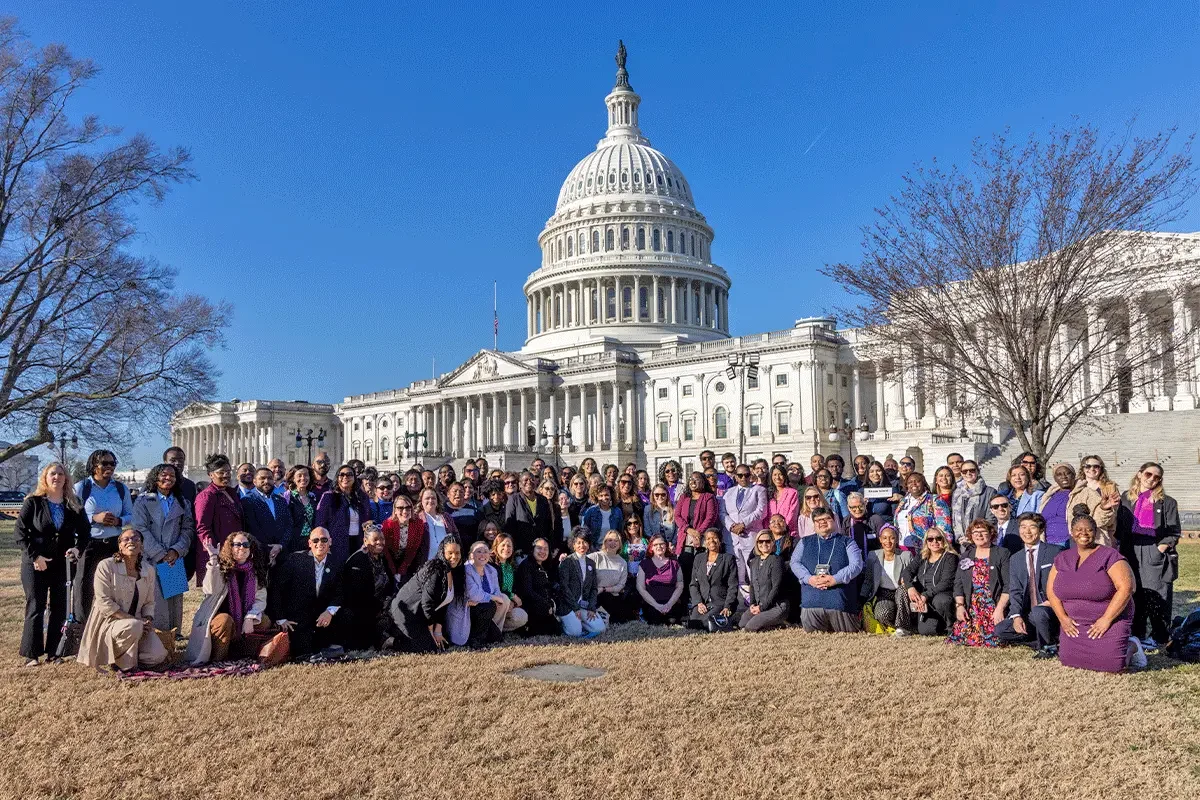
CHWs, partners, and supporters from NACHW and PIH in front of the Capitol Building. Photo by Melissa Lyttle for PIH
1. Overview
On March 11–12, 2025, more than 100 CHWs, allies, and advocates from across the country gathered in Washington, D.C., for the third annual Community Health Worker Capitol Hill Visit. The event brought CHWs face-to-face with policymakers to share stories from their communities, raise awareness of the CHW workforce, and advocate for federal investment in community-based care.
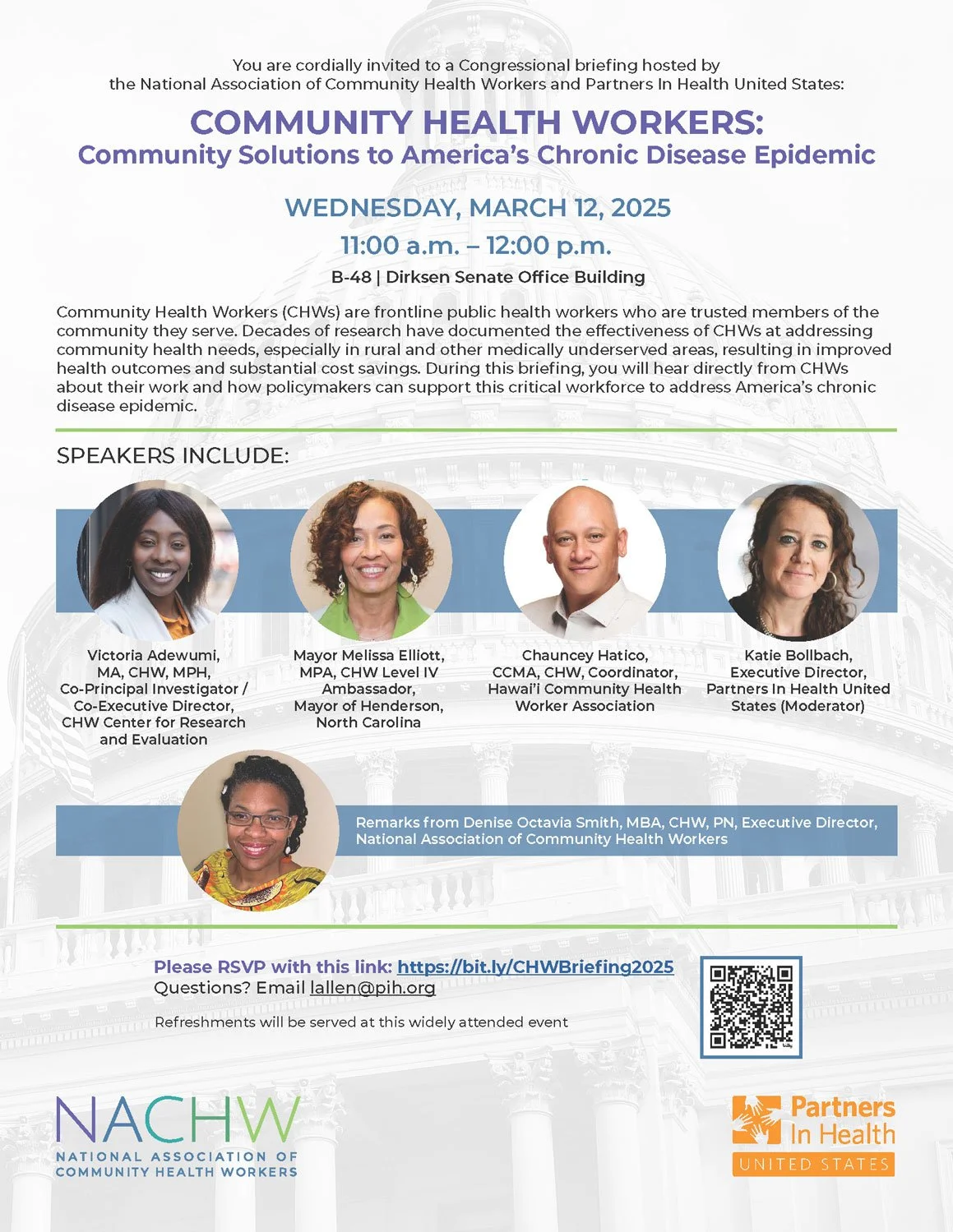
The two-day event featured a Congressional briefing, a public rally, and 40+ meetings with members of Congress and legislative staff. Together, participants highlighted the vital role CHWs play in advancing health equity, reducing health disparities, and building trust between healthcare systems and the communities they serve.
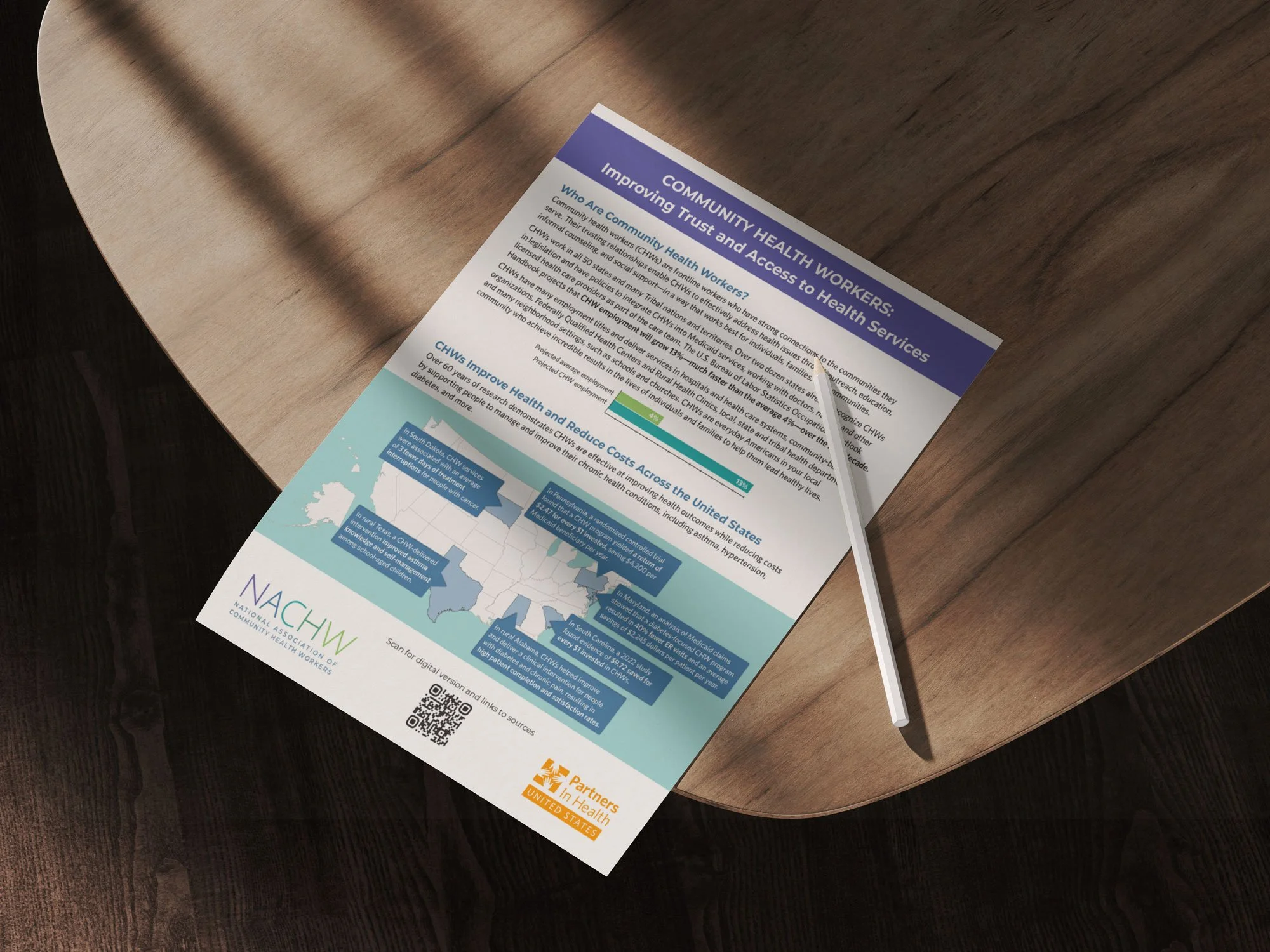
As the Creative Services Manager at PIH-US, I supported the event by designing a unified visual identity and a suite of advocacy materials that amplified the CHW voice. From printed leave-behinds and policy one-pagers to digital graphics and rally signage, the creative work aimed to make the CHW movement visible, cohesive, and memorable—both on the Hill and across digital platforms.
The goal: create a visual system that was memorable, accessible, and shareable—enabling CHW leadership to shine in every conversation on the Hill.
Co-branded Congressional briefing poster
2. Challenges
The 2025 CHW Capitol Hill Visit presented four key challenges:
Need for visibility: Despite their critical role in advancing health equity, CHWs remain under-recognized in federal policy, underpaid, and often excluded from sustainable funding and workforce development initiatives.
Complex policy communications: The event sought to change that narrative—requiring visual and written messaging that was clear to policymakers, that broke down complex legislation, and was emotionally resonant with the public.
Cross-partner cohesion between distinct brands: Because the event was jointly organized by NACHW and PIH-US, each with distinct branding systems, it was crucial to create a shared visual identity that honored both organizations while presenting a unified advocacy voice.
Tight design timelines: The design window was short, with evolving legislative updates and speaker details. The creative process had to balance speed, accuracy, and alignment—without losing the warmth and energy that defines CHWs’ work.
Together, these challenges called for an adaptive, people-centered design approach—one that could move quickly while amplifying CHWs’ collective voice with clarity, unity, and heart.
3. Approach / Process
My Responsibilities:
Creative strategy
Visual identity systems
Multi-platform asset design
Cross-partner alignment
Rapid iteration under shifting legislative details
Project management (Asana and daily stakeholder check-ins)
Co-design and seek stakeholder input.
The creative process began with listening. I collaborated closely with CHW leaders, advocacy organizers, and communications colleagues from both PIH-US and NACHW to understand their priorities and the stories they wanted to elevate. Together, we clarified a shared message: Community Health Workers (CHWs) are frontline public health workers and trusted members of the communities they serve. Decades of research show that CHWs improve health outcomes and reduce costs, especially in medically underserved areas. Our goal was to design materials that uplifted CHWs’ voices—so lawmakers could hear directly from them about their impact and how policy can strengthen this vital workforce. Throughout the process, I sought continuous feedback from both organizations to ensure the visuals reflected CHWs’ professionalism, compassion, and pride.
Design strategy built upon two brand identities.
The visual system merged two distinct brand languages—PIH-US’s bold, high-contrast palette and NACHW’s softer, community-centered tones—into one cohesive identity. This balance reflected both the urgency of federal advocacy and the humanity at the heart of CHW work. Photography showcased CHWs in real settings, while concise data visualizations helped distill complex legislative goals. Printed leave-behinds incorporated bold iconography and white space to make information digestible for policymakers. Across all materials, bilingual accessibility, inclusive representation, and clear visual hierarchy guided the design, ensuring that every piece could inform, inspire, and mobilize.
Implementation of deliverables across digital and print formats.
I designed deliverables with a global reach:
Infographics summarizing key legislative priorities and illustrating CHWs’ proven impact on health equity.
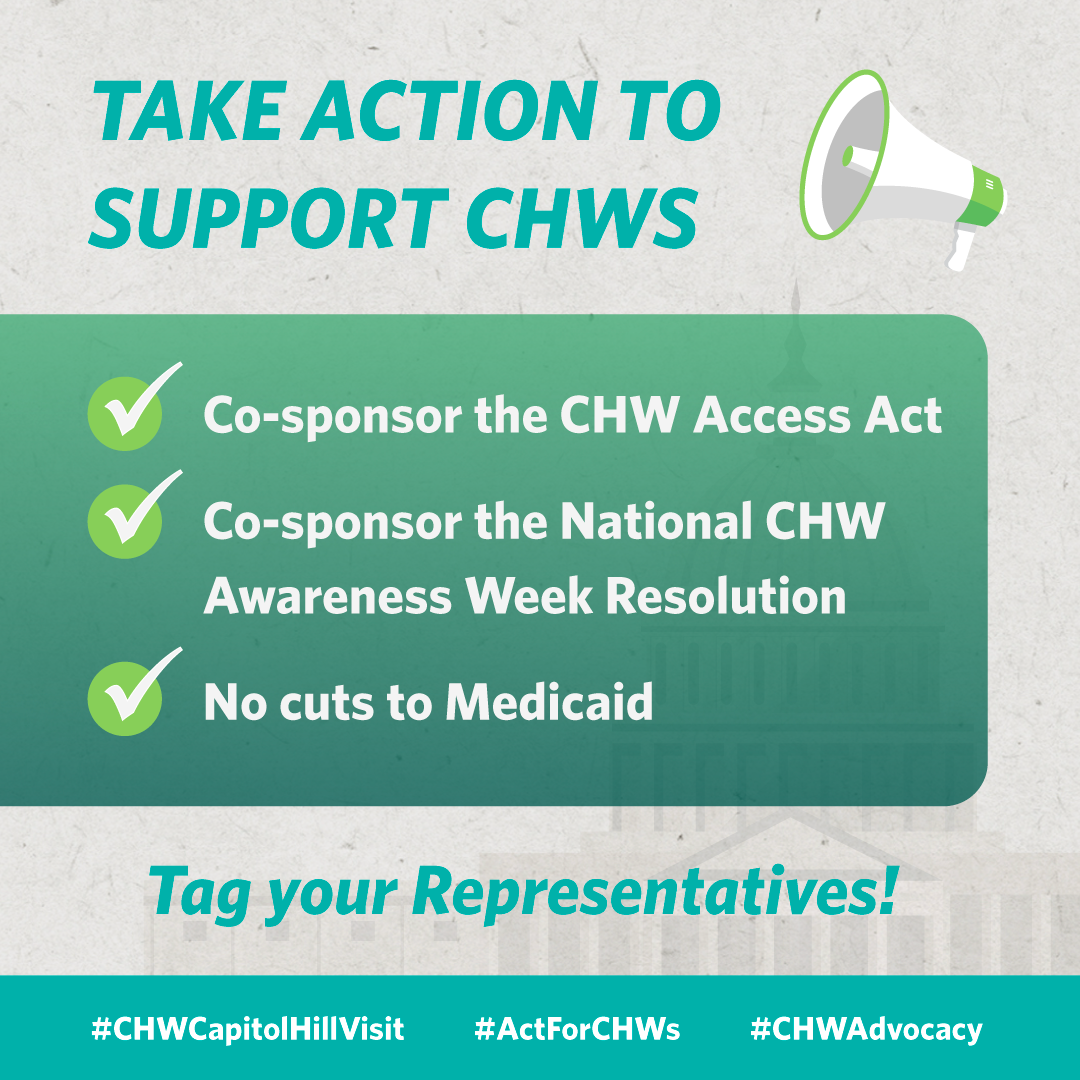
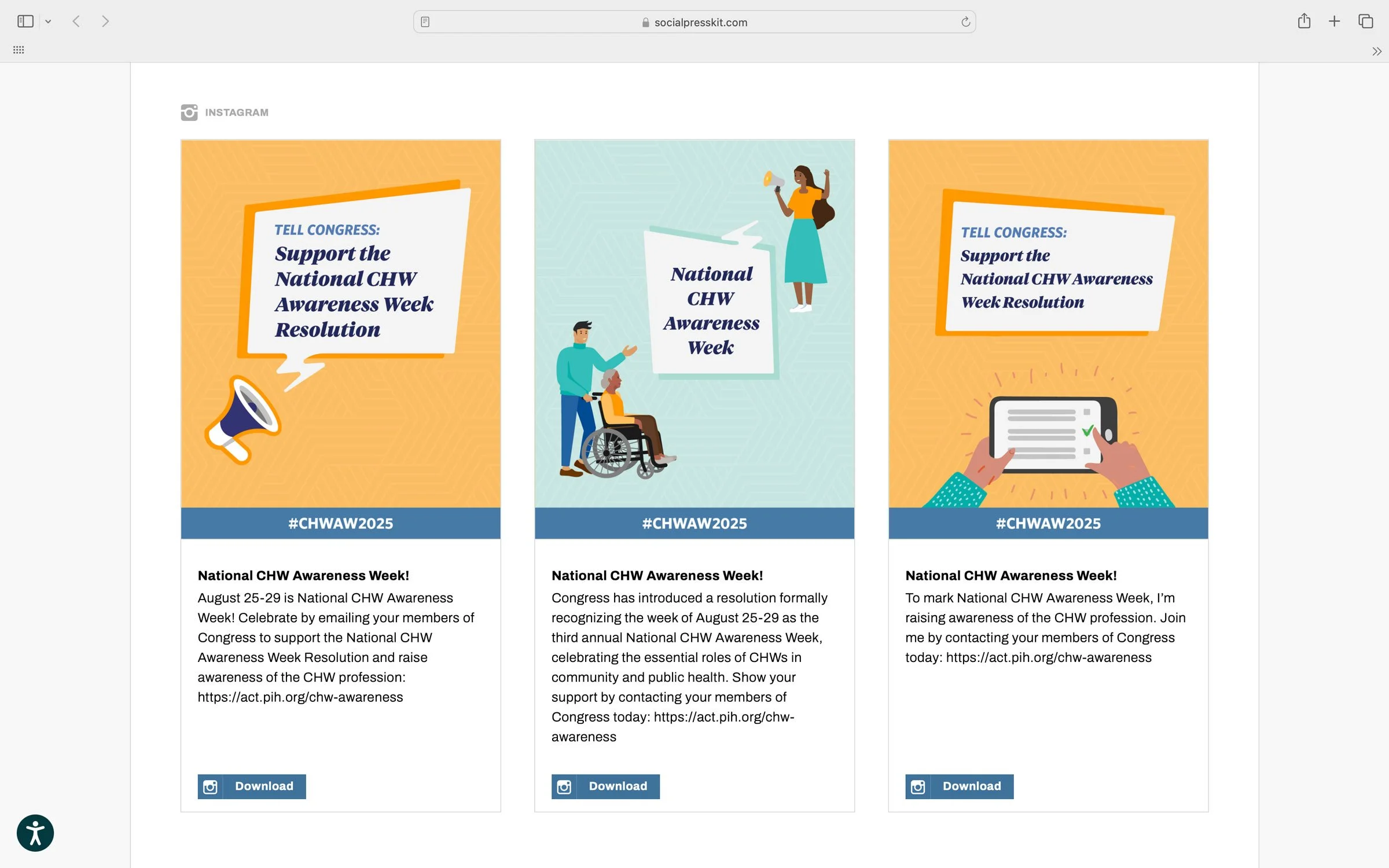
Social media graphics featuring CHW portraits, quotes, and concise CTAs for attendees and partners to share.
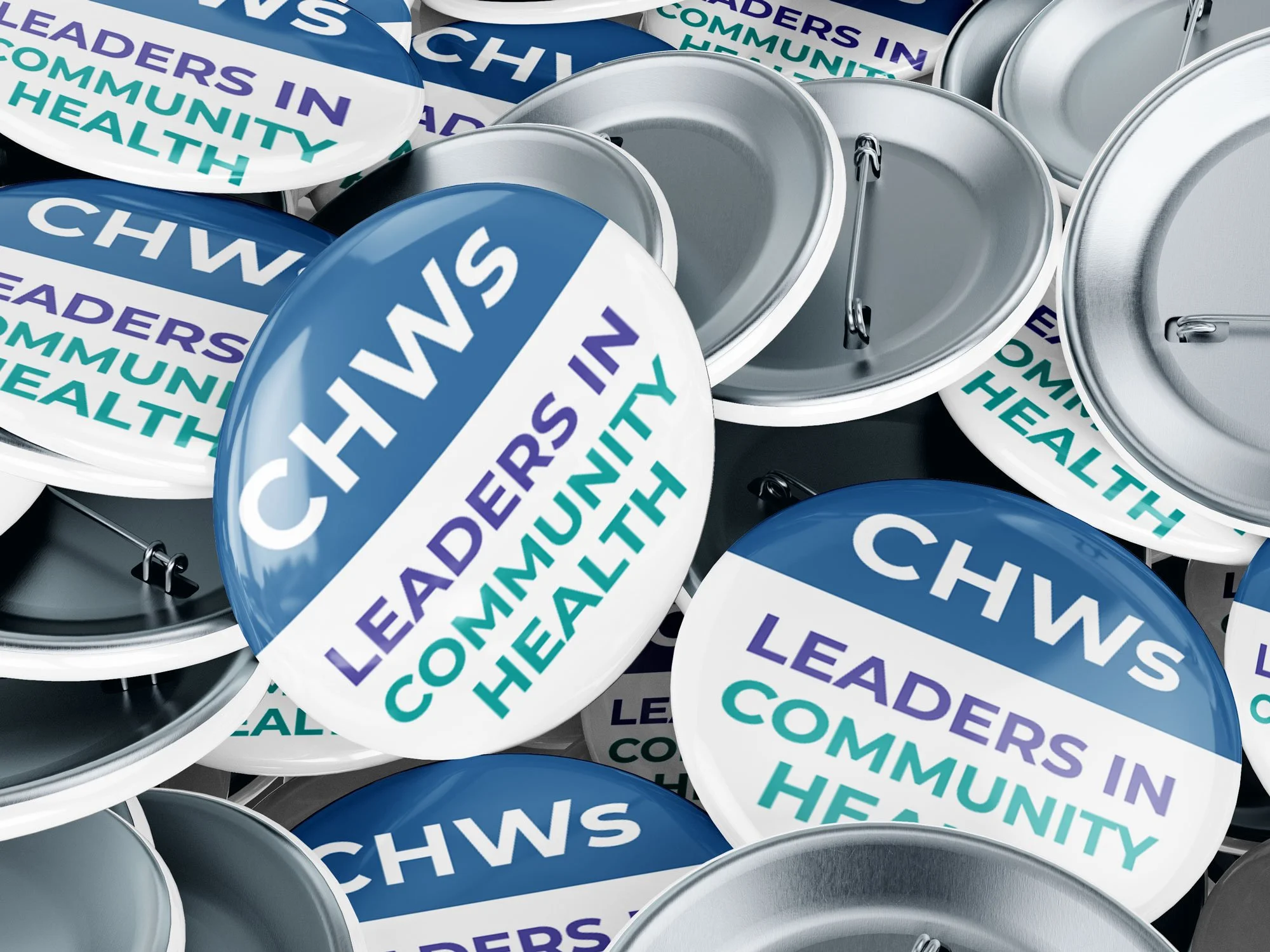
Print materials including event signage, buttons, and briefing leave-behinds tailored for congressional meetings.
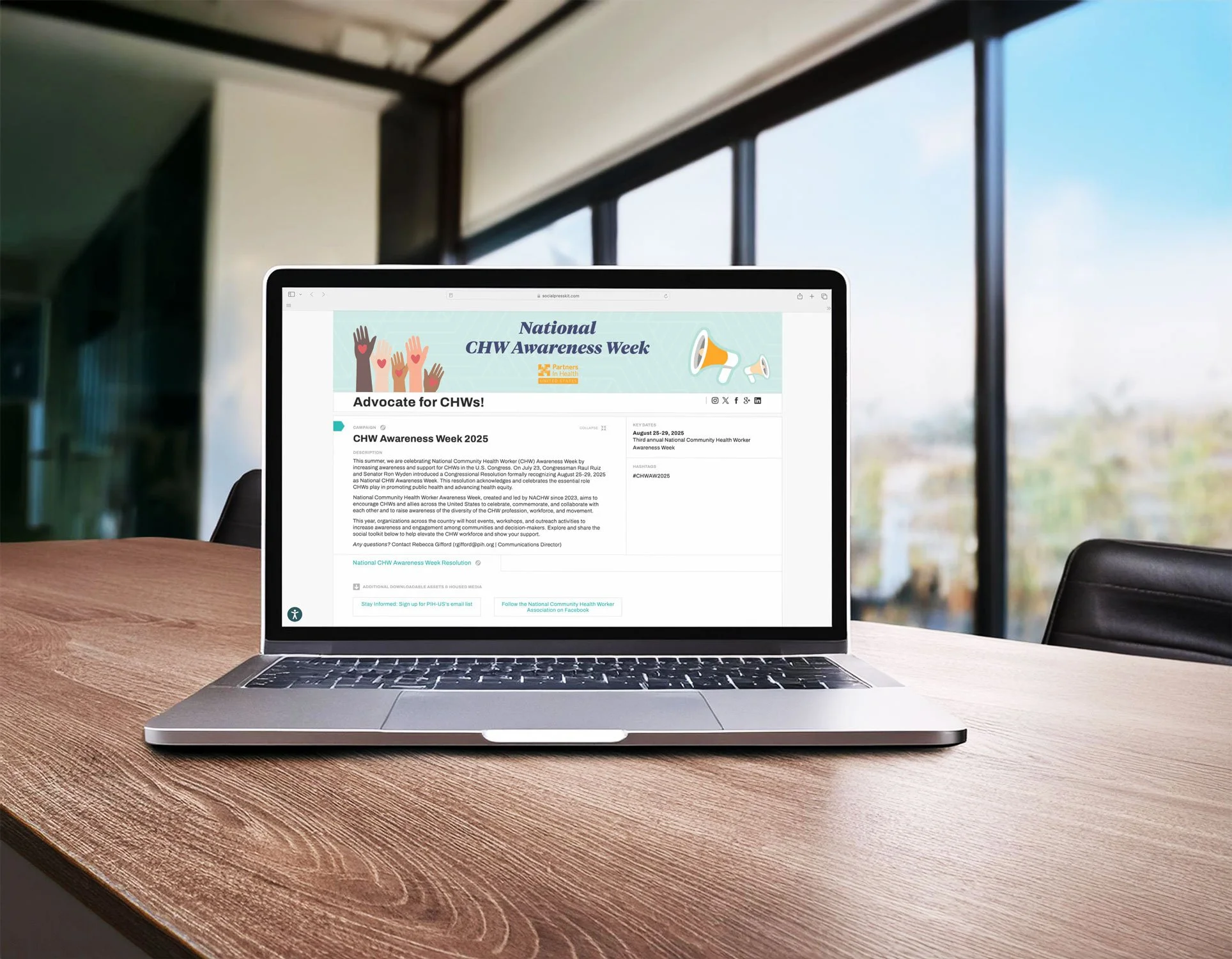
Social Press Kit providing ready-to-share visuals and messaging for advocates, influencers, and partner organizations to amplify consistent, on-brand advocacy content.
Working under short timelines, the design process required rapid iteration and daily coordination across teams. Using shared Asana boards and feedback loops, we balanced accuracy, alignment, and visual storytelling—translating complex policy into clear, human-centered communication.
Our north star: make CHW voices impossible to ignore.
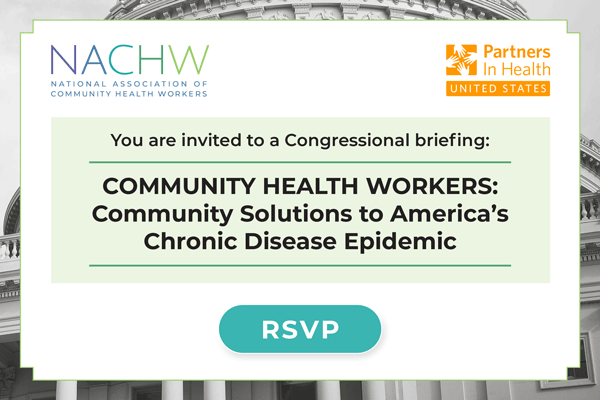
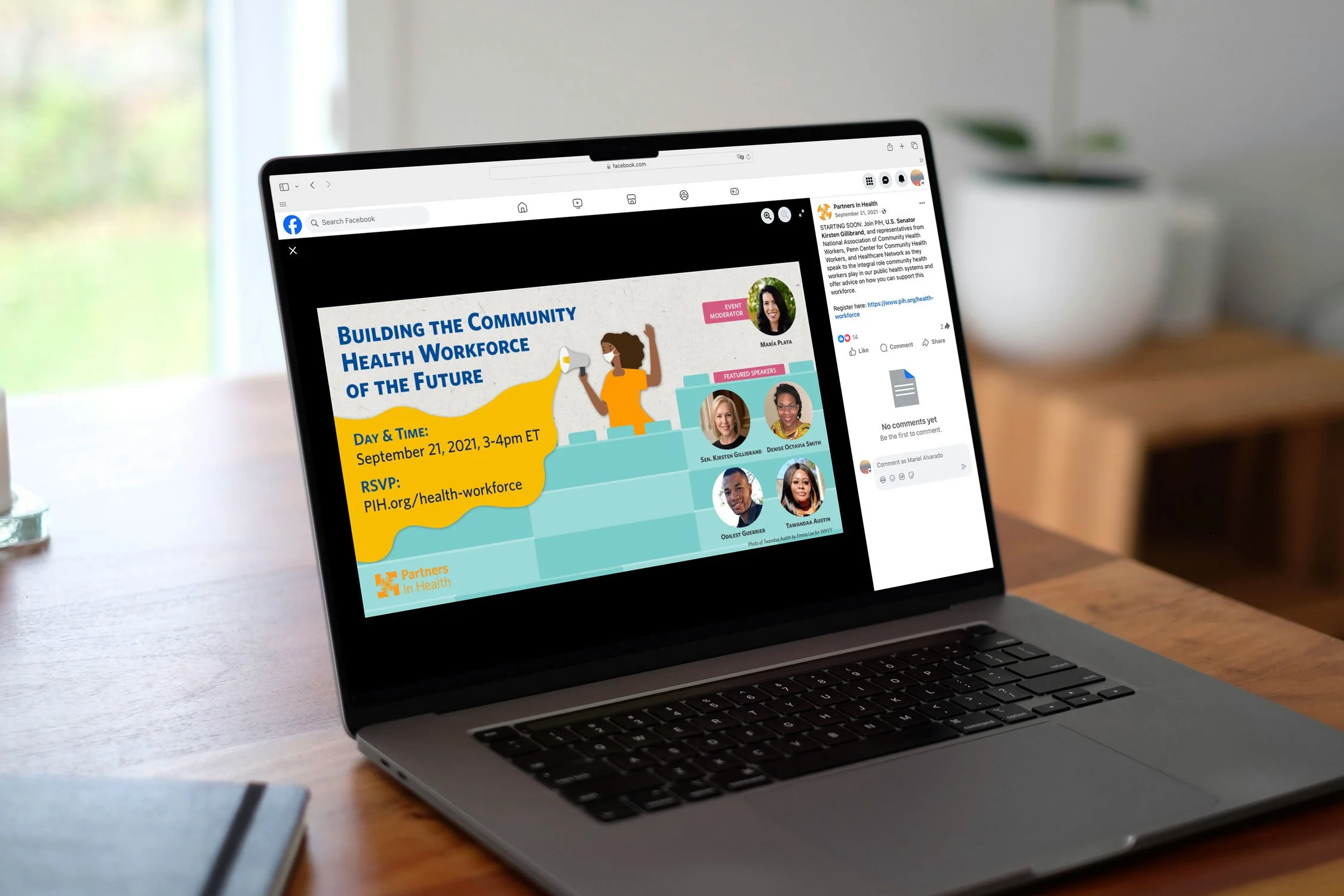
Digital RSVP to the Capitol Hill Visit
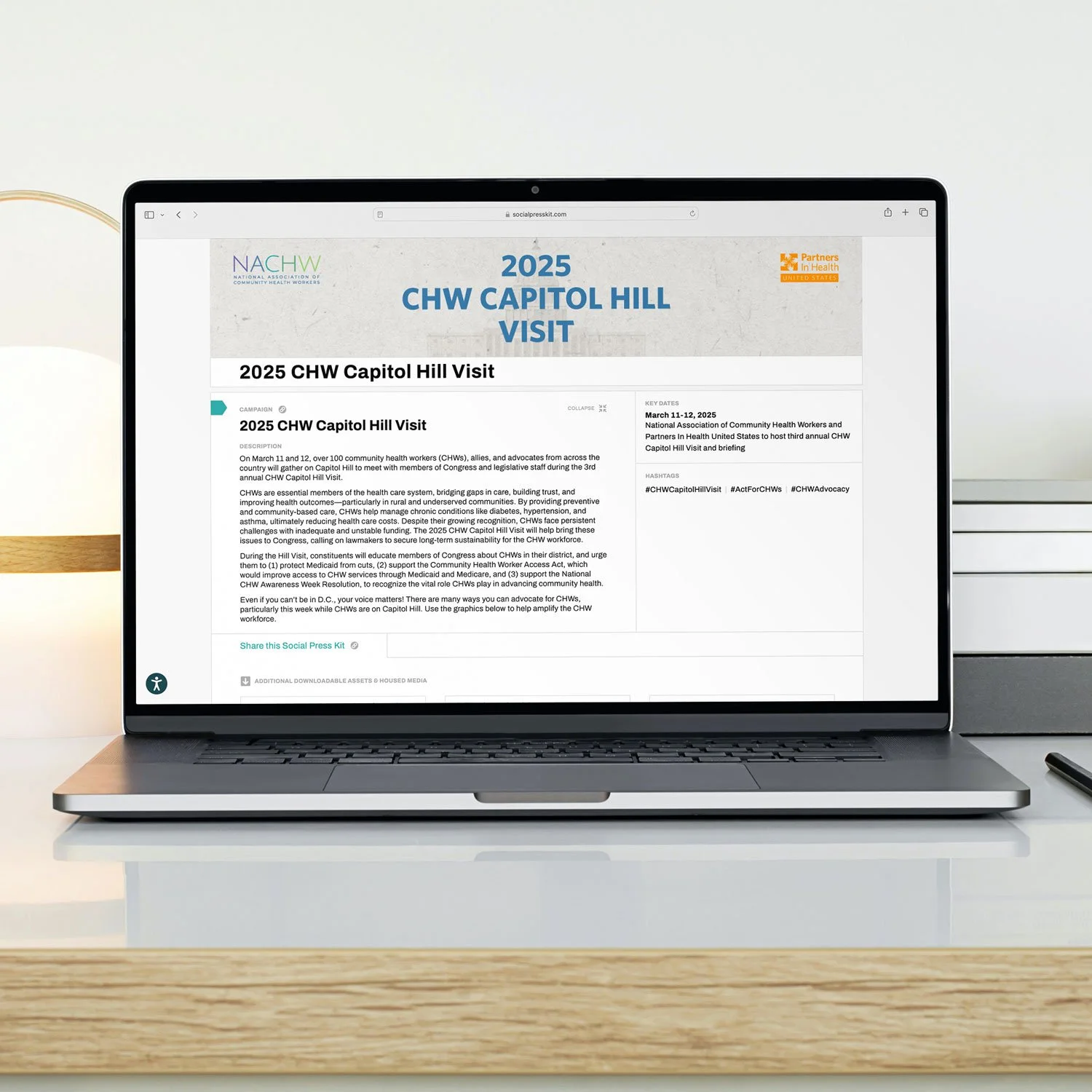
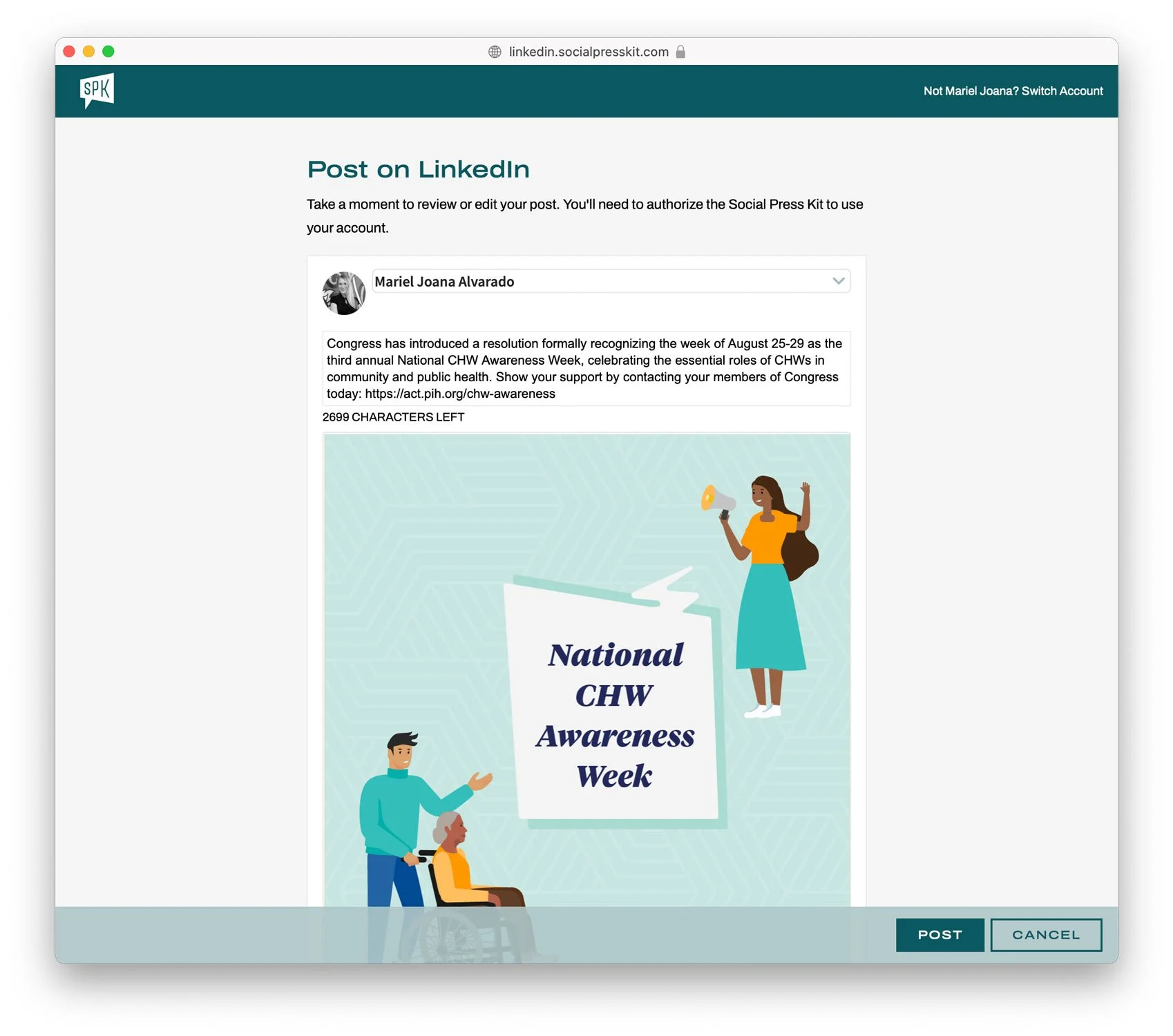
Capitol Hill Visit Social Press Kit
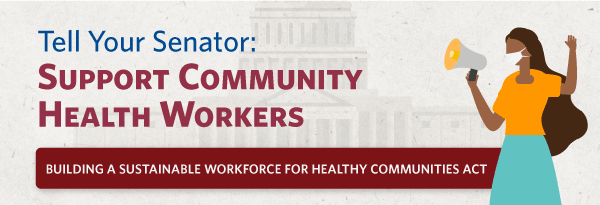
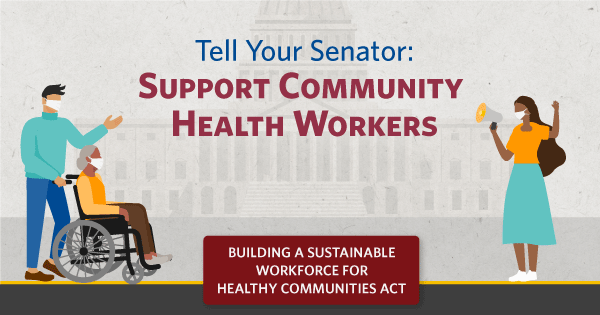
Graphic from the Capitol Hill Visit Social Press Kit
Graphic from the Capitol Hill Visit Social Press Kit
Before & After
Before:
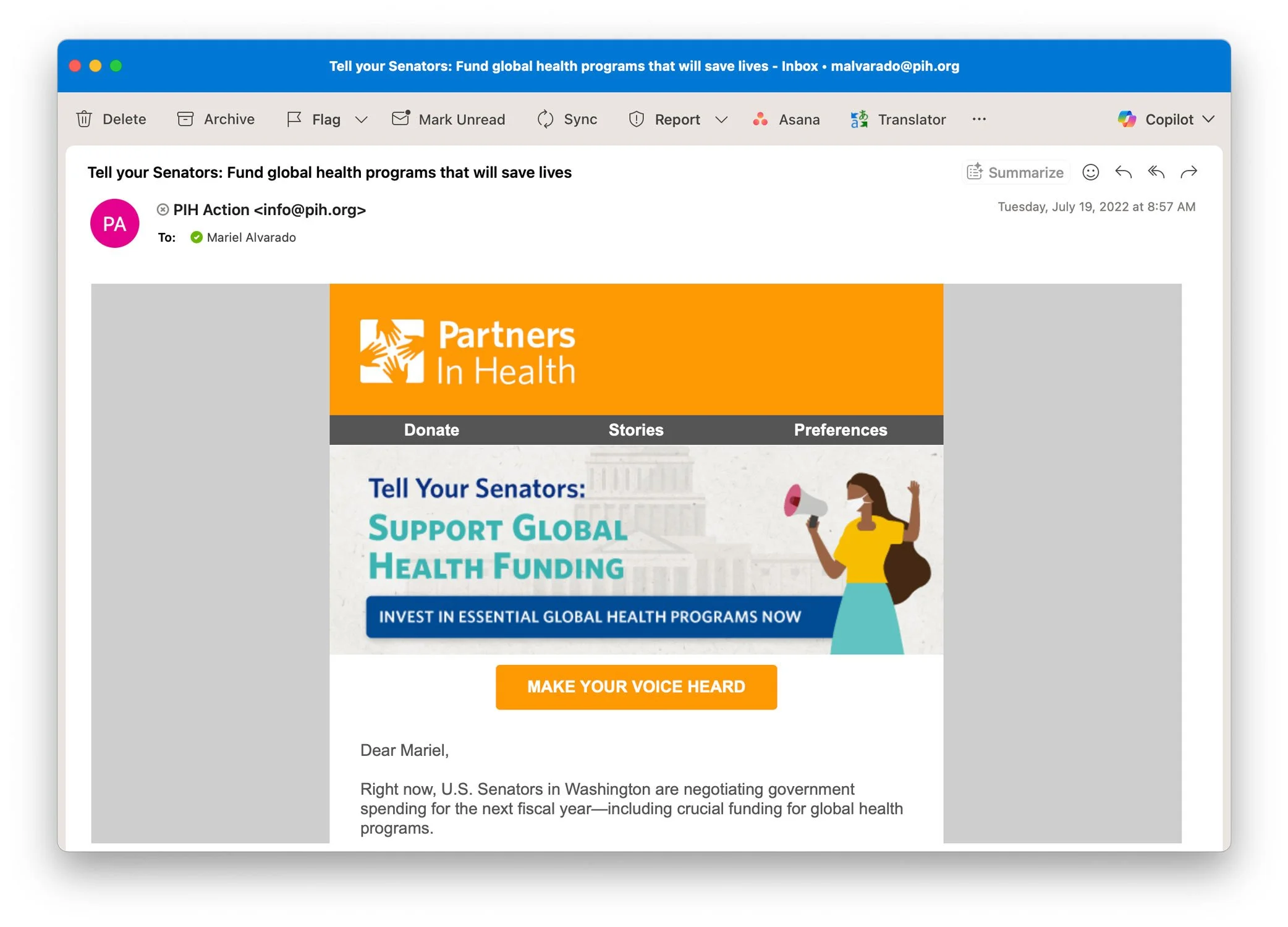
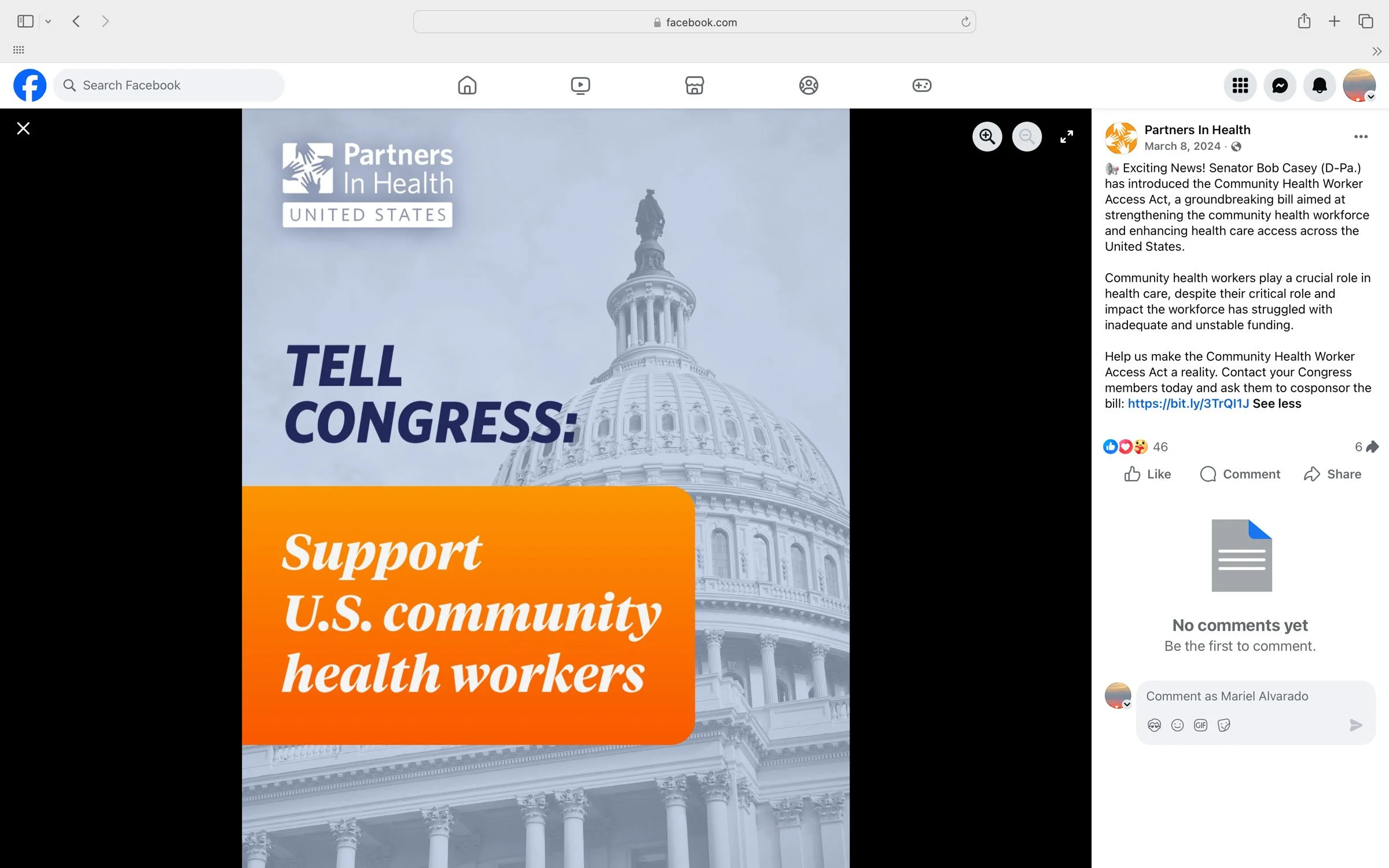
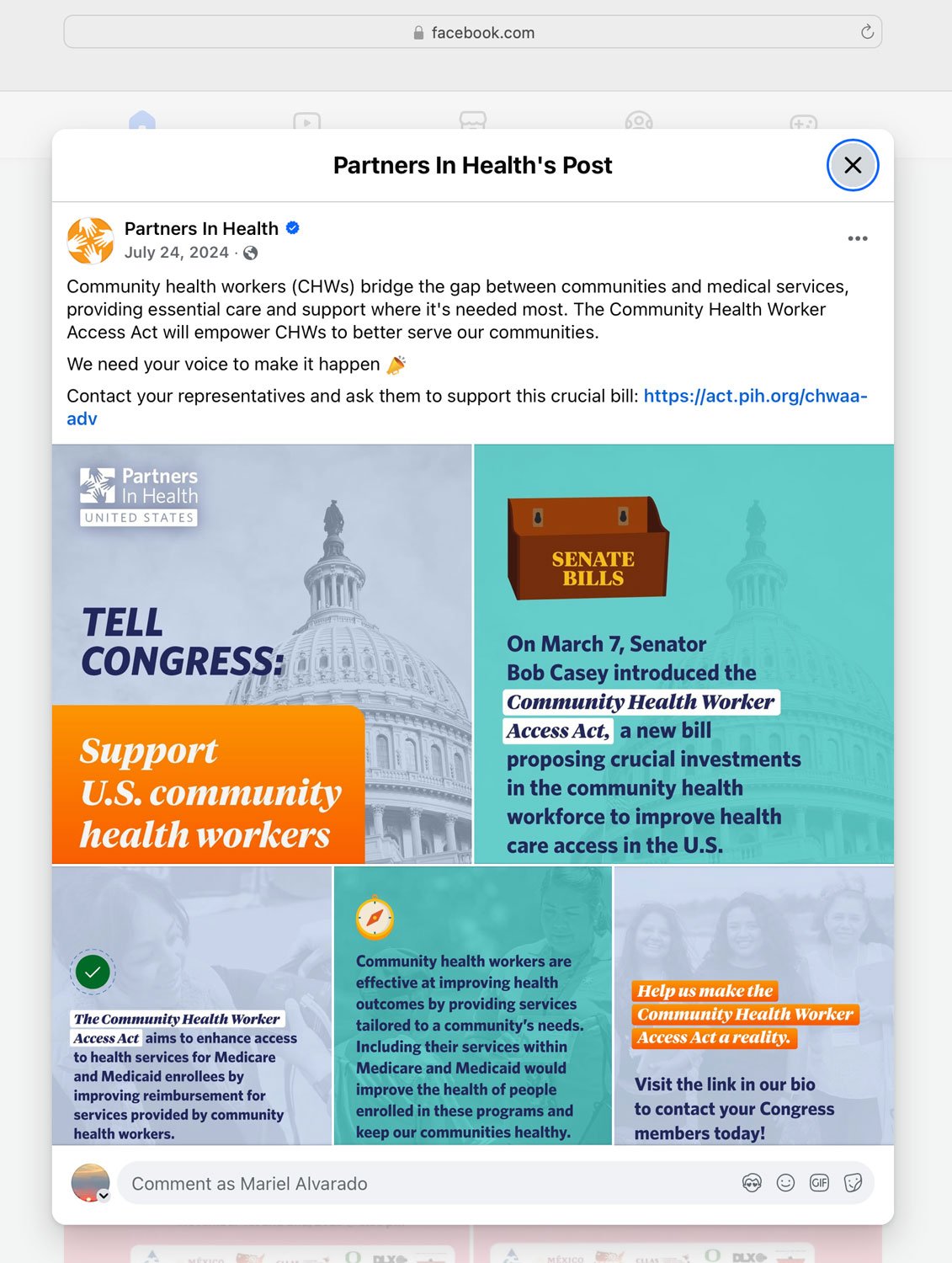
Previous years’ Hill Day campaigns relied primarily on static, text-heavy materials shared through organizational channels, which limited reach, shareability, and audience participation. Messaging was accurate but not optimized for social engagement, and distribution depended heavily on PIH-US and NACHW’s own platforms. Compared to past PIH Social Press Kit campaigns—which typically saw only 1–2 clicks—engagement was modest and difficult to scale.
After:
In 2025, we shifted to a true social-first advocacy strategy, grounded in accessibility, shareability, and unified storytelling. I designed a Social Press Kit (SPK) with ready-to-share graphics and messaging that partners, advocates, and CHWs across the U.S. could use instantly—before, during, and after the Capitol Hill Visit. The result was a coordinated visual identity that strengthened message consistency and dramatically expanded the campaign’s reach.
Traffic to the SPK rose immediately upon launch and peaked the day before Hill Day, signaling strong early adoption among partner networks. The clearest indicator of impact was asset downloads (33)—an action-based metric that reflects real participation, not just passive interest. This performance represents a substantial leap in engagement compared to previous PIH SPK campaigns, where downloads typically hovered at 1–2 total.
4. Outcome / Impact
Results summary:
SPK launched 5 days pre-event, generating an early engagement surge
Used across 12+ partner organizations
Enabled coordinated messaging in Washington, D.C. and nationwide
Expanded remote participation for supporters unable to attend in person
Drove multi-platform activation across Facebook, LinkedIn, Instagram, and Twitter
Traffic and downloads spiked exactly during Hill Day
The 2025 Capitol Hill Visit campaign demonstrated how intentional design, timing, and coordination can meaningfully expand advocacy reach. Launching the SPK ahead of the event created steady momentum across partner networks, with engagement peaking exactly on 3/10–3/11 in sync with Hill Day activities. This alignment shows the strategy worked: the design assets were used at the moment they were needed most.
Because the toolkit was accessible across platforms, the campaign generated activity on Facebook, Instagram, LinkedIn, and Twitter, extending the message beyond Washington, D.C. and enabling allies nationwide to participate digitally. For supporters who couldn’t be physically present, the SPK offered a direct pathway into the movement—turning online engagement into a visible show of solidarity.
The unified visual identity also strengthened message consistency across more than a dozen partners, making it easier for advocates to share content without losing clarity or tone. This cohesion, coupled with social-ready graphics, helped translate a complex policy moment into a shared, uplifting narrative about CHW leadership.
The campaign’s impact extended beyond social media. Following Hill Day, PIH-US published a reflective blog, “Community Health Workers Bring Their Voices to Capitol Hill,” which documented the event’s energy and outcomes, further strengthening the movement’s visibility.
In essence, the 2025 campaign didn’t just communicate advocacy—it built a shared visual language that strengthened belonging, elevated CHW leadership, and carried their message to policymakers and communities alike.
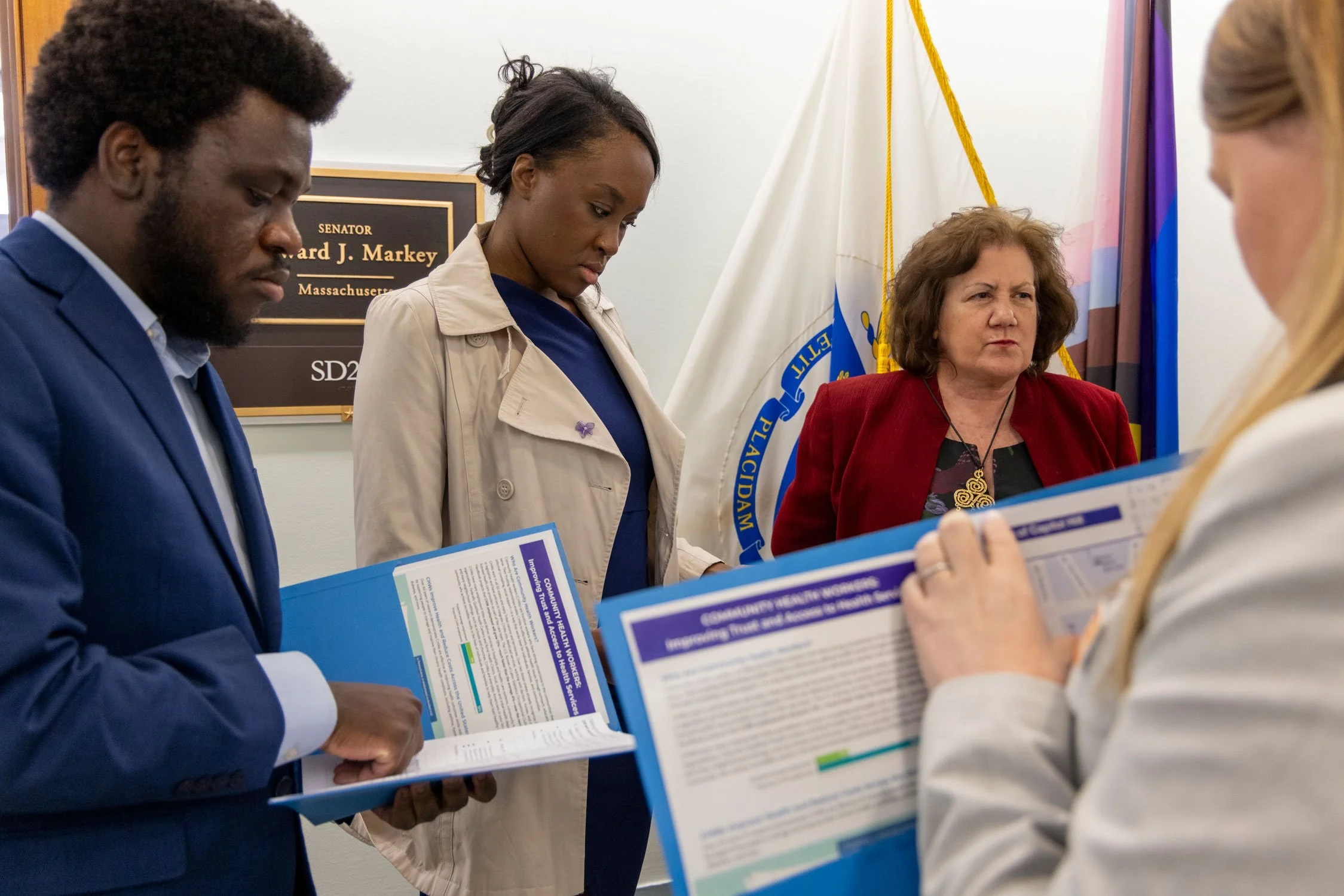
CHW advocates waiting to speak with their local senator during the 2025 CHW Capitol Hill Visit. Photo by Melissa Lyttle for PIH
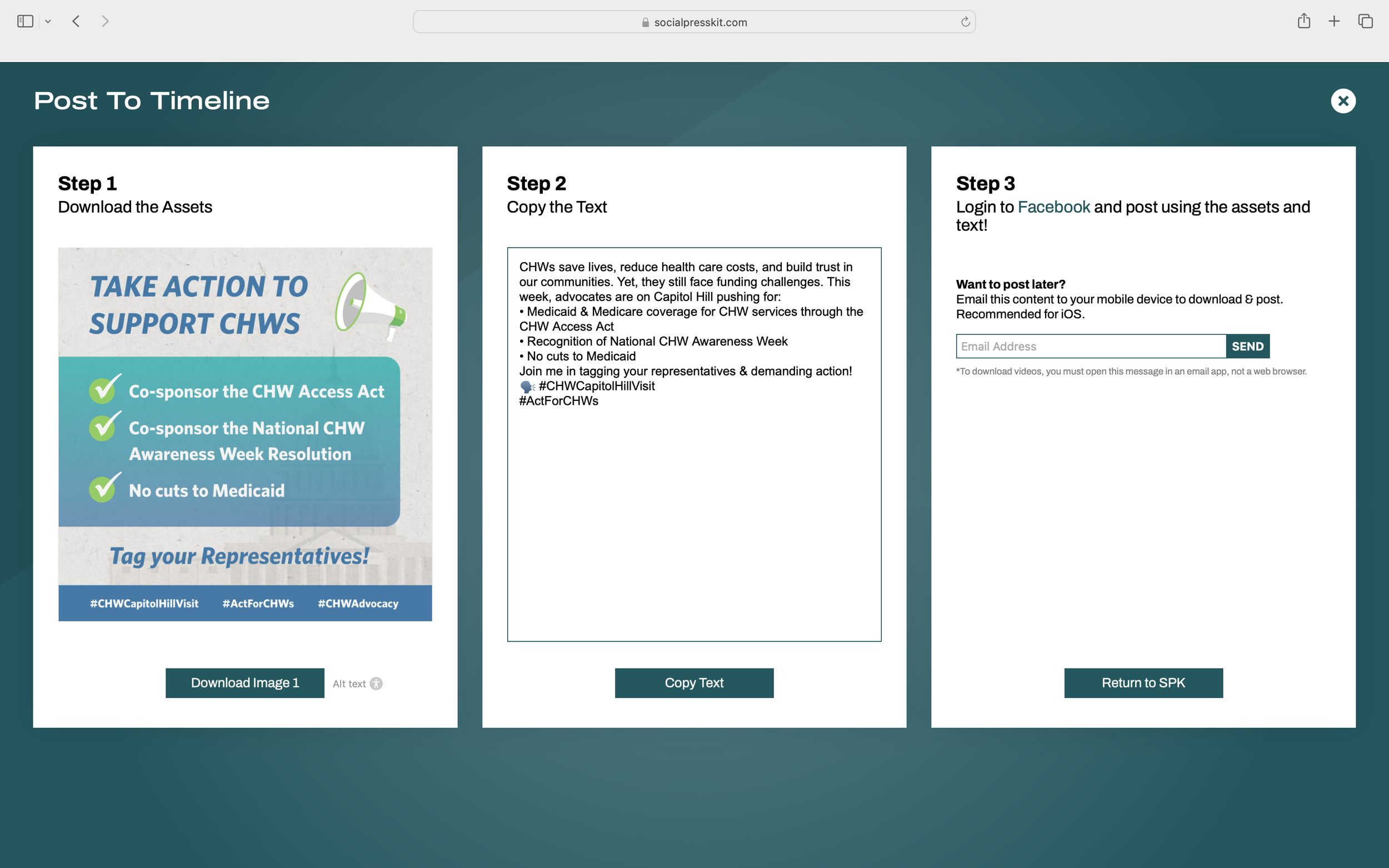
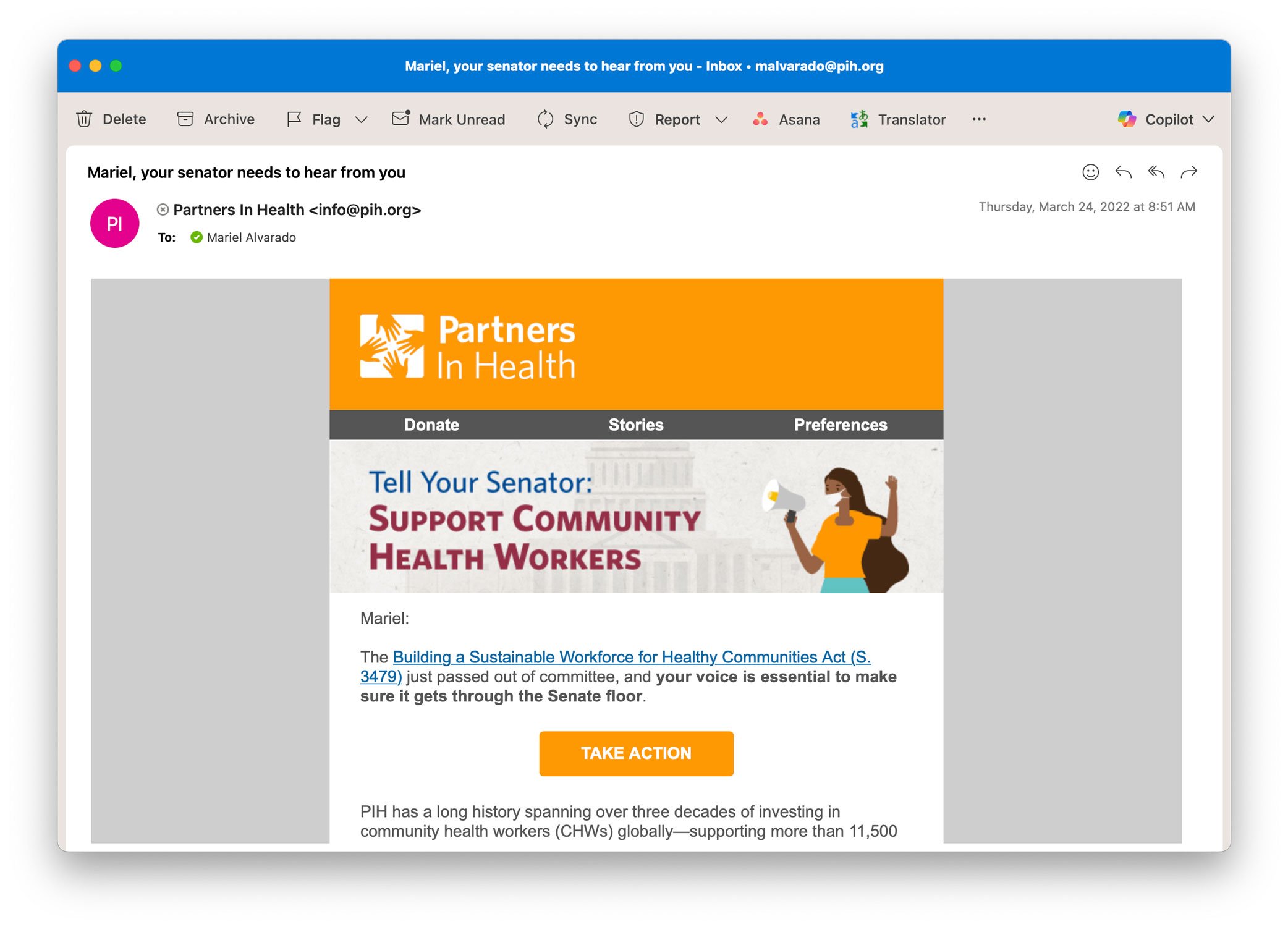
Capitol Hill Visit Social Press Kit posting in action
5. Reflection / Lessons Learned
Designing for the 2025 CHW Capitol Hill Visit reaffirmed my belief that effective advocacy design depends on systems thinking—understanding how messages, tools, and relationships connect across teams, timelines, and audiences. Translating CHWs’ lived experience into clear, actionable storytelling required both empathy and the ability to align moving parts into one cohesive whole. A few takeaways from the project are:
Tactical Lesson: Design the ecosystem, not just the assets. Building a reusable Social Press Kit turned a short campaign window into a coordinated communication system—one that partners could adapt, amplify, and sustain beyond the event itself.
Leadership Takeaway: Co-design builds alignment across complex systems. Engaging CHW leaders, advocates, and communications partners early created shared ownership, faster decisions, and lasting cohesion—proof that systems built with trust work better, scale farther, and feel more human.
This project reinforced that design is not just about visuals. It’s about building systems that help stories travel farther.